
The Fringe
PGA DFS preview: THE CJ CUP Byron Nelson and TPC Craig Ranch

Good morning, Fringe readers!
Aronimink isn’t playing quite like anybody suspected, which is probably a good thing because it turned out to be a banger of a major tournament. Enjoy the action, and good luck if you’ve got a sweat going.
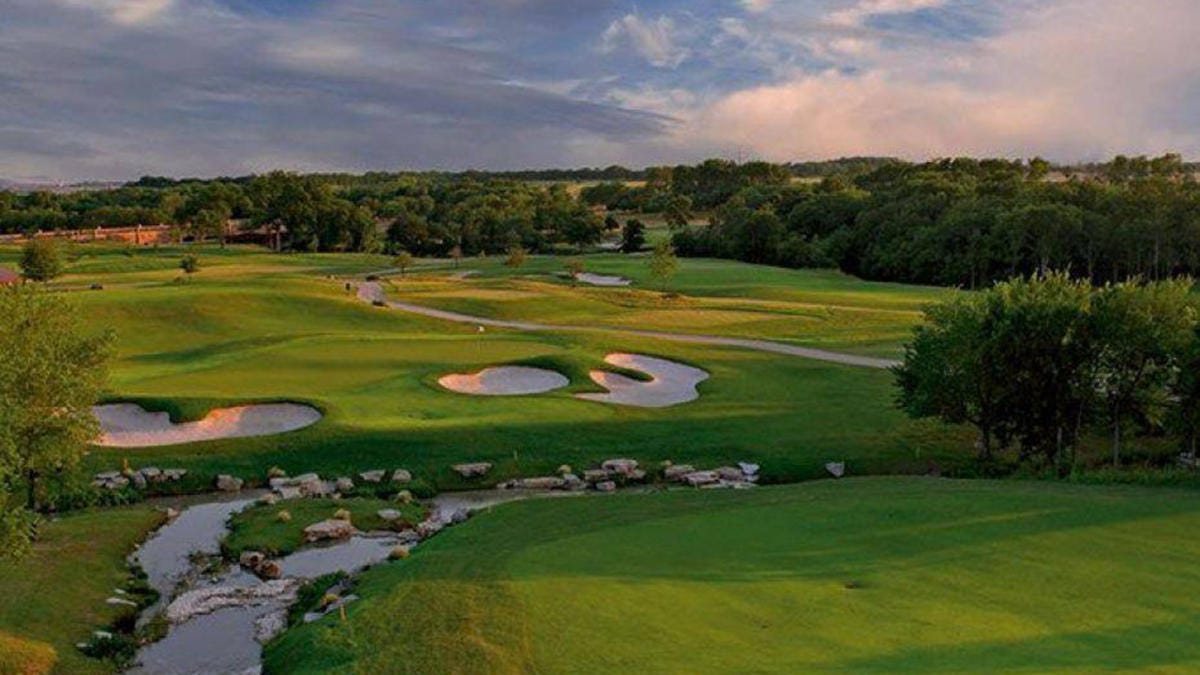
The PGA Tour is heading back to Texas for THE CJ CUP Byron Nelson at TPC Craig Ranch in McKinney.
For those of you that have been around a while, this name may sound vaguely familiar to you, but a little bit off. It’s because The CJ Cup and Byron Nelson were two different tournaments just a few of years ago.
The CJ Cup, established in 2017, was a limited-field, no-cut event that was supposed to be played in South Korea at the Nine Bridges Golf Club. The Covid-19 pandemic disrupted international travel, however, and the last three editions were played in the United States; twice in Las Vegas (once at Shadow Creek Golf Course and once at The Summit Club) and then in South Carolina at the Congaree Golf Club.
Right up to the very end, organizers of the CJ Cup said they hoped to return to South Korea when travel restrictions eased. Something strange happened along the way though. When AT&T backed out of the final year of their sponsorship of the Byron Nelson so they could divert the funds to the newly elevated AT&T Pebble Beach Pro-Am, the CJ Group hopped on the title sponsorship and suddenly there was no longer a tournament in South Korea.
So, even though it has a new, but familiar name, we can still think of the tournament as the Byron Nelson.
The origins of the Byron Nelson are a little unclear. The tournament’s website indicates that it was founded in 1926 but experienced a hiatus at some point and didn’t return until 1944. Other sources suggest it was founded in 1944 and was played for a few years before going on hiatus until 1956, when it was played twice in the same year. Either way, it didn’t become a regular stop on tour until 1956.
Despite the starts and stops, the tournament has always been played in the Dallas area. In the early years, the tournament went by the Dallas Open, or Texas Open, or something else along those lines. It didn’t get its namesake until 1968.
After moving from venue to venue, it finally settled down at the TPC Four Seasons in 1994. It stayed at the Four Season until 2018, when it moved to Trinity Forest Golf Club. The tournament was only played there twice before the tournament was cancelled in 2020 due to the Covid-19 pandemic. When the tournament returned in 2021, it was played at its new home, TPC Craig Ranch.
TPC Craig Ranch has been a bit of a pushover in its short history. K.H. Lee won the first two events at -25 and -26. Then Jason Day won it at -23 (cutline: -4; median score for cutmakers: -12.5). Two years ago, Taylor Pendrith birdied the final hole to get the win at-23 (cutline: -6; median score for cutmakers: -14).
Last year, Scottie Scheffler opened with a round of 61 to take the first-round lead. He extended his lead to six after the second round. By the end of the third, his lead was eight. On Sunday, he shot 63 but didn’t increase his lead, finishing at -31 (cutline: -5; median score for cutmakers: -12). Erik Van Rooyen finished in second place, and Sam Steven finished in third, eleven shot behind Scheffler.
The Field
Traditionally, the Byron Nelson has been regarded as one of the more prestigious events outside of the majors. Some of the best golfers to play the game have won it, including Byron Nelson, Ben Hogan, Sam Snead, Jack Nicklaus, Tom Watson, and Tiger Woods.
More recently, the tournament has failed to attract the strongest fields due to the change in scheduling of the majors. The Byron Nelson has always been played in May, but the reshuffle put it right around the PGA Championship (it was usually before the PGA, now it’s the week after).
The tournament saw a momentary uptick in strength of field after moving to TPC Craig Ranch with golfers like Brooks Koepka, Dustin Johnson, Bryson Dechambeau, Jordan Spieth, and Hideki Matsuyama showing up. The uptick was short lived, however. The strength of field was back down to 210 in 2024 (31st of 43; average was 268).
Last year, the strength of field was 268.5 (29th of 46 tournaments; tour average was 280.0)
The field is set for 145 golfers, with four open qualifiers yet to be determined. As has been the case for all of the regular full-field events this season, if Brooks Koepka stays in the field, it will be expanded to accommodate threesome for the first two rounds.
It doesn’t look like there will be much change in the strength of field this year. Once again, there are just two golfers inside the top 25 in OWGR in the field. One is the world’s number one golfer, Scottie Scheffler, back to defend his title, and the other is Si Woo Kim. Jackson Buchanan, graduate of University of Illinois, is in the field after winning the 2024 Byron Nelson Collegiate Golf Award.
Here is a link to the full field.
Course Description
TPC Craig Ranch was designed by Tom Weiskopf, with D.A. Weibring consulting, and opened in 2004.
There has been some considerable work done to the course over the last two years as part of a renovation project led by Lanny Wadkins. Ahead of the tournament last year, new irrigation and drainage systems were installed and all of the turfgrasses were removed and replaced with a ryegrass except for the greens. The GCSAA Tournament Fact Sheet indicates there was some work on the trees, but I haven’t seen any details about the project. There were also tee boxes added to six holes (5, 9, 10, 11, 12, 14), extending the course by 155 yards.
In phase two of the project, the greens were rebuilt and reshaped with new contours and possible pin positions and converted to bent grass. The bunkers were also reshaped and repositioned, significantly altering landing zones. The fairways were converted to Stadium Zoysia grass and the rough and tee boxes were converted to TifTuf Bermuda grass.
Their goal was to increase the strategic demands for elite competitors without sacrificing playability for members. The changes to the landing zones mean golfers will have to be more strategic off the tee and consider potential approach angles. The zoysia grass fairways should challenge golfers on approach more. And the changes to the green complexes should create firmer and faster surfaces and add a little more resistance around greens.
In all, the changes should shift TPC Craig Ranch away from a bomb-and-gouge course to a second-shot course, and hopefully keep the winner from reaching 30-under again.
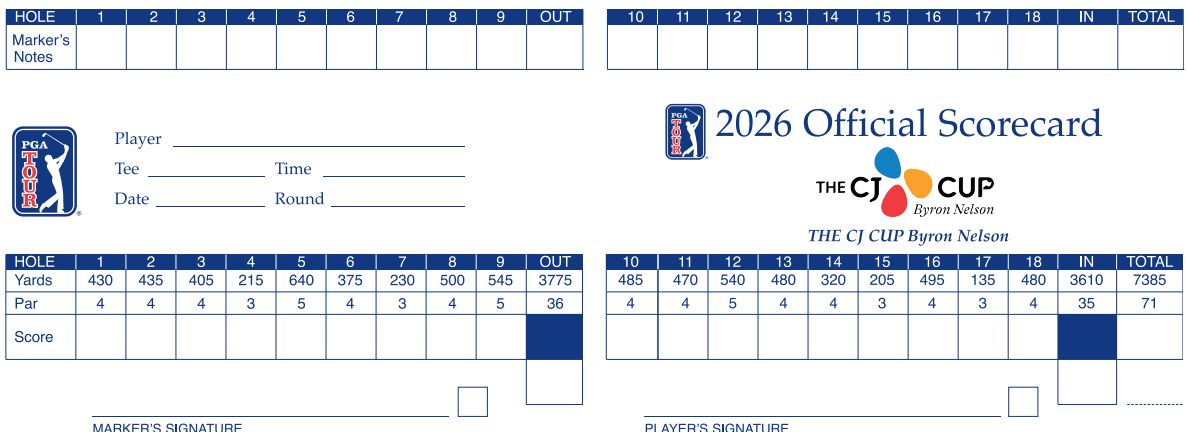
There were also tweaks made to the length of every hole on the scorecard, resulting in the total length decreasing by 184 yards. Some of the more significant changes occurred on #2 (31 yards shorter), #12 (47 yards longer), #13 (32 yards shorter), #14 (42 yards shorter, and definitely a drivable par 4 now), and #18 (72 yards shorter). Hole #12 will also play as a par 5 this year, and #18 will play as par 4.
TPC Craig Ranch is now a 7,385-yard, par-71, parkland design. By par, it is now the 15th longest course on tour this year (out of the 38 courses I did calculations for). It was the 6th easiest course on tour last year (out of the 40 courses that are ranked by DataGolf).
There are four par 3s, eleven par 4s, and three par 5s. The two par 5s from last year were two of easiest holes on the course, giving up birdies at least 45% of the time (#18 was also one of the easiest holes but will be a par 4 this year, and it’s safe to assume #12 will join the ranks of the most easy). There are also two short par 4s that give up birdies over 38% of the time. The par-4 3rd hole has its fairway split by a creek but is still a good scoring opportunity; golfers can play it safe to the right or challenge the creek and go left. If they fly the creek, they are left with a short wedge into the green. Even one of the par 3s, the short 17th (now playing just 135 yards), played below par (there are 12 holes that played below par last year). The other par 3s are all over 200 yards in length, and played above par. The other three holes that played over par were the two long par 4s (480 and 495 yards this year) and the 430-yard first hole. Six of the par 4s fall in the 450-500 yards range.
Here is the official 2026 scorecard:
Off the tee, golfers will see average width, tree-lined fairways (32 yards wide according to DataGolf, 20th of 40 courses, down 5 yards from the previous year ). There are bits of forest and solitary trees scattered throughout the course, but the tree line is pulled back from the fairways. There is a limestone-lined creek that runs throughout the course, making an appearance on 14 holes, but it doesn’t really come into play unless golfers are extremely off target. There is also a pond that comes into play on two holes. Not only is most of the water away from the landing zones, but the rough near the water is grown out, preventing balls from rolling into the penalty areas (water officially comes into play on 8 holes according to the GCSAA). There is bunkering throughout, but it’s noticeably absent from the landing areas on a few holes. The rough is Bermuda grass and was previously kept at 3.25 inches, but no word on if it will be this long again this year. The fairways are zoysia grass. There is a gentle roll to the terrain, with 15 meters of elevation change throughout the property and golfers climbing a total of 65 m during their rounds.
On approach, golfers will see bent grass greens that are above average in size (6,778 sq. ft.). I imagine the exact measurement will change with the restructuring of the greens, but the overall size will remain the same. The new greens should firm, but they have usually been watered between rounds and kept average in firmness, though that might change this year if they want to keep scoring down. They have been average to fast in speed with a published Stimp of 11.5 on the GCSAA Tournament Fact Sheet. The greens are protected by bunkers, the creek on a few holes, and the pond on one hole. There isn’t much rough around the greens as the fairways run right up to the greens on most of the holes, so golfers will be chipping from tight-lies rather than long grass. The green structures were pretty flat before, so it should be interesting to see how much movement Wadkins was able to add. They are also open in the front, so golfers can play run-up shots on approach if needed.
The golfers that have faced TPC Craig Ranch haven’t been afraid to attack its length with driver off the tee. The average Driving Distance was 298.4 yards last year (18th of 40 courses on DataGolf) and driver usage was 79.5 % (tour average is 68.9%). The primary reason for this is that there hasn’t been much penalty for missing the fairway. Driving Accuracy was just 56.4 % (25th of 40 courses) but Greens in Regulation was 69.5% (13th of 40 courses). Even if they aren’t hitting fairways, golfers are still able to hit the greens at a good rate. And even if they don’t hit the green in regulation, getting up-and-down is slightly easier than the standard PGA course. The scrambling percentage was 61.6% last year (tour average is 58.9).
The Course Table on DataGolf demonstrates just how easy TPC Craig Ranch has been. It had the 2nd easiest par 3s, the 11th easiest par 4s, and the 4th easiest par 5s last year. It was the second easiest course on approach overall, the easiest course from inside 150 yards, and the 2nd easiest from over 150 yards. It was the second easiest course around the green, the easiest course around the green from the fairway, the 8th easiest course from the rough, and the easiest from the bunkers. It was also the 9th easiest course for putting. Even with all of the water on the course, TPC Craig Ranch has had the 15th fewest number of reloads and 12th fewest penalties of any course on tour.
The weather
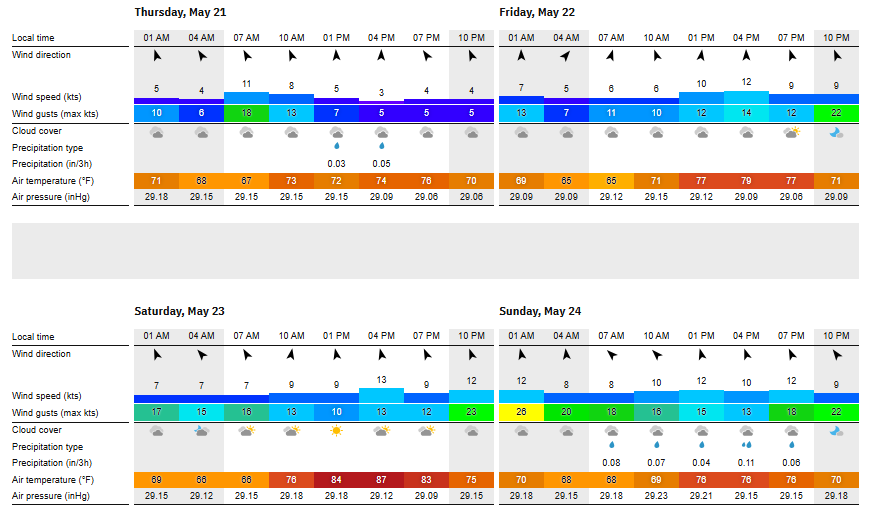
Whenever the tour is in Texas, we need to pay attention to the weather. Last year, the second round was delayed by inclement weather and high winds were tempered by rain softening the course, and scoring was similar to previous years, even with Scottie completely boat racing everybody.
This year it looks like weather could have an impact again. There is rain in the forecast on Tuesday and Wednesday ahead of the tournament and a possibility for mor rain on Thursday and Sunday during the tournament. Good chance we’ll get soft conditions. High will be in the 70s most of the time, with a chance for 80s on Saturday, and cloudy skies. Sustained winds will be around 10 mph, but there could be periods of significant gusting.
We probably don’t have to look for wind specialists, but the wind could set up for a possible wave advantage.
DFS Strategy
As always, the first thing to do is come up with our plan for the week, including bankroll usage, contest selection, leverage, and roster construction. I’ll then go over the type of golfers that I am targeting and the models I’ll use to find those golfers.
Although the list of winners is short, it shows that almost any caliber of golfer can win at TPC Craig Ranch. Scottie is obviously the best golfer in the world. Jason Day is a crafty veteran that usually occupies the middle of pricing on DraftKings. And K.H. Lee and Taylor Pendrith bounce between the 6k and 7k ranges depending on the strength of the field. As with most birdie fests, any type of golfer is capable of winning if they get a hot putter. The changes to the course may have made it easier for talented golfers to separate themselves, but I would say this metric is unpredictable until I see otherwise.
Despite all of the water on the course, TPC Craig Ranch has not been a very volatile tournament. There may be a lot of water on the course, but golfers tend to avoid it and there haven’t been many full-blown collapses. Chalk one up for the predictable side.
The chalk has a poor track record as well. Last year, only two chalk golfers finished inside the top 15, Scottie Scheffler and Jordan Spieth. The year before that, only two chalk golfers finished inside the top 10, and nine of them missed the cut, primarily in the lower ranges. And three years ago, only two chalk golfers finished inside the top 10, Scotttie Scheffler and Tyrrell Hatton. Elite chalk at the top of the pricing board tends to perform well at TPC Craig Ranch, the rest, however, does not. This points to a less predictable tournament.
The Course Insights on DataGolf regarding whether the tournament favors Accuracy or Distance goes back to 2021 when the tournament moved to TPC Craig Ranch. In 4 of the 5 years, the tournament slightly favored accuracy or was neutral. In the fifth year, it clearly favored distance. I think we can reasonably conclude that this course is neutral in terms of favoring accuracy or length, which makes it a little unpredictable since everybody can compete here.
Outside of 2025, when Scottie Scheffler clobbered the field (this is also the year that favored distance), the slope of the DataGolf Strokes Gained: Total vs. Predicted regression for TPC Craig Ranch ranged from 0.91 to 1.02. That means that the course was either neutral or higher-skilled players separated from lower-skilled players less than they do at a typical PGA Tour course. This points to TPC Craig Ranch being a course where the best players are unable separate themselves, making it a less predictable event.
Overall, I think these metrics point towards the Byron Nelson being a largely unpredictable event, and we should limit our bankroll exposure. On one hand, it looks like truly elite golfers can separate themselves, but after that it’s anybody’s guess. As with most tournaments that turn into a birdie fest, it usually comes down to whoever has the hottest putter, which in itself is hard to predict, but it also means almost every golfer in the field can contend. If you went extra hard for the PGA Championship, I think the Byron Nelson is a good spot to slow down and let your bankroll recuperate.
The CJ Cup Byron Nelson is your standard run-of-the-mill mid-season event for the PGA Tour. DraftKings should have their full slate of contests for this tournament: double-ups, 50/50s, single-entry contests, GPPs, and qualifiers for the Fantasy Golf World Championships and Milly Maker. Last year, contest sizes were down slightly (the Birdie has 23k entrants as opposed to the standard 29k). Make sure to check your favorite contests early this week to confirm their size. Since I expect this tournament to be a little on the unpredictable side, I would avoid 50/50s and double ups
Once you have decided which contests you will be playing in, we need to decide how much leverage we want and how we’re going to get that leverage.
The cumulative ownerships of winning DFS lineups over the last few years were 80-85%. This may seem contrary to my analysis of chalk performance above, but when you account for Scottie Scheffler’s ownership it makes more sense. Last year, he was almost 45% owned, accounting for more than half the ownership of the winning lineup. If he was a more standard 20-30% for a 10k golfers, then the cumulative ownership would have been 60-70%, much more in line with a tournament where the chalk doesn’t usually perform well. I think the trick this week will be to roster the high-end chalk and then find ways to get leverage elsewhere.
As always, we have the same three places we turn to for leverage every week. The first is the ownership projections, where we will try to identify the chalk and then look for good pivots off the chalk. We can also us the projected ownership to figure out what the popular roster constructions are going to be and then figure which constructions will lead to unique combinations of golfers. We can then look at the pricing; identify golfers that are priced too low and consider fading them because they will likely be over-owned and identify the golfers that are priced too high and give them consideration because the DFS community will try to avoid them.
I think the primary way to get leverage this week is to avoid the low-priced chalk. As I described above, the low-priced chalk just doesn’t perform very well at TPC Craig Ranch. There have been a couple Top-20 finishes but also a lot of missed cuts. I think if we avoid the low-priced chalk, we’ll probably get all the leverage we need.
Last year we say that Scottie Scheffler was 45% owned and the other 10k golfers were 15% and 12%, so roughly 70% of lineups were stars-and-scrub lineups. I think this means we can get some leverage with balanced lineups, but probably not as much as we’re accustomed to.
I do think that DFS players will be targeting the bombers this week given the length of the course and past perceptions that this is a bombers course. We should be able to differentiate ourselves by targeting the plodders. If you do target the plodders, just make sure that they are good with their long irons.
I’m also thinking you can target the golfers that rely on strong putting as a leverage play. These golfers can go overlooked if they struggle off the tee or on approach because they do not perform well in models. We usually target good ballstrikers and hope they get hot with the putter, but I think we can get leverage if this turns into a putting contest if we target good putters and hope they get hot with the clubs with which they underperform.
Once you’ve decided which contests you want to play and how you’re going to get leverage, you can start thinking about roster construction. So, turning to the Roster Construction Matrix, we have a weak field on an easy course; the matrix points us towards a balanced build. Stars, particularly when they are elite golfers, have performed well at Craig Ranch in the past. Scottie Scheffler is the only golfer in the field that I would consider elite (Si Woo Kim is good, but come on, he’s not in the same realm). Unless you’re considering Scottie Scheffler this week, I think the balanced lineups are the way to go. Last year, when Scottie won, stars-and-scrubs won. Two years, ago, with Scottie not in the field, balanced lineups won. Three years ago, when Scottie was in the field, stars-and-scrubs lineups were the winner.
My plan this week is to stick to my usual bankroll and focus on 20-entry GPPs and single-entry contests. Half of my lineups with probably be balanced lineups, and the other half will be Scheffler lineups. I don’t think we have to get crazy over leverage this week. The balanced lineups will probably be unique due to their construction, as long as I avoid playing chalky golfers in a every position. The Scheffler lineups will take some thought though. If I am able to fit in any 9k or 8k golfers, I will lean towards playing the chalk but if I identify any good pivots, I won’t shy away from playing them. Since the low-priced chalk tends to underperform at TPC Craig Ranch, I will avoid playing the low-priced chalk. Mixing and matching non-chalk plays from the lower ranges should be enough to create unique builds. Since I am going to be mixing and matching low-priced plays, I will probably take a few extra shots on one-offs and end up with 7 to 9 of them.
Now that we know what kind of lineups we want to build and how much leverage we’ll try to get, we can start thinking about the actual golfers we want to populate our lineups with.
TPC Craig Ranch has been easy in almost every respect; hitting the greens was easy, scrambling was easy, and putting was easy. The only thing that can’t be considered easy was hitting the fairways, but there wasn’t a huge penalty for missing them anyway. With everything from tee to green so easy, this tournament would eventually turn into a putting contest.
The wildcard, however, is if the renovation is actually going to change anything. My early lean is yes. The Bermuda rough should be tougher to play from, and golfers will be rewarded for hitting the fairway with an opportunity to go at the pin. The bigger penalty for missing the fairway should result in more missed greens and the upgrades to the greens should make scrambling harder. I don’t think TPC Craig Ranch has suddenly become U.S. Open difficult, but I don’t think this is going to be a true birdie fest either.
Des[ite the popular conception, the DataGolf Insights demonstrate that TPC Craig Ranch is not necessarily a bombers paradise, and accuracy is important. I think the changes to the course put an even bigger emphasis on accuracy off the tee.
In years past, I have left Around the Green data out of my model, but with more missed greens this year and more difficult green complexes, I think it’s worth adding.
As usual, I will start my process by building my Course Fit model and putting together the Recent Form and Course History spreadsheets. I will use my model to target golfers that are strong off the tee with a lean towards accuracy, are precise with their mid and long irons, can scramble from the short grass, are comfortable putting on bentgrass, and can go low if conditions are easy.
We now have five years of Course History at TPC Craig Ranch. I like to look at five to ten years of results, so I have just enough data to start really considering Course History. TPC Craig Ranch is one of the least predictive courses according to DataGolf, so I won’t put a lot of emphasis on Course History, but I’ll certainly take a look to see if there is anybody that seems to love the course or absolutely hates it.
Here are the course fit statistics I will use (all from the last 100 rounds):
Off-the-tee:
Strokes Gained: Off the Tee: A staple in my model that I usually use with another statistic to fit the needs of a specific course. It is probably the best statistic to judge a golfer’s overall skill from the tee box.
Driving Accuracy: The Course Insights page on DataGolf suggests that TPC Craig Ranch has been either neutral or favored accuracy most of the time in it’s first five years. I think the renovation also puts a little more emphasis on accuracy. So I am going to flip the script and look for accurate golfers this year.
Approach:
Strokes Gained: Approach: A staple in my model week after week; precision on the approach isn’t needed to hit the greens but it will help give golfers the looks at birdie that they need to contend.
Opportunities Gained 150-200 yards: I really want to emphasize the approach game, specifically if golfers are giving themselves opportunities to make birdies when they have scoring clubs in their hands. Over 37% of approach shots came from this range last year, and I expect that could be even more this year.
Proximity from 200+ yards: Over 35% of approach shots come from over 200 yards at Craig Ranch. Golfers will need to be proficient with their long irons, but we don’t necessarily need to them to get scoring opportunities with them. A two putt for par on a long par 3 is a good score, and a two putt for birdie on a par 5 works too.
Around the Green:
Scrambling for Short Grass: While scrambling hasn’t been overly difficult in the past, I expect there to be a few more missed greens this year, so golfers will have to rely on this skill more. The main difficulty around the greens is playing from tight lies, so I will focus on scrambling from the short grass.
Putting:
Strokes Gained: Putting on bent grass: Putting is another staple in my model, I will switch up the surface as needed. This week we are targeting bent grass specialists.
Scoring:
Par 5 BoB%: Although there are only three of them, the par 5s are the best scoring opportunities on the course. Golfers must take advantage of them to compete.
Birdies or Better Gained: Even I don’t think Craig Ranch will be the pushover it has been, but I still think we are going to get some low scores . I want to roster golfers that make a lot of birdies. I will look at the statistic on courses that are easy relative to par.
Strokes Gained: Total on Easy Courses: Again, I don’t expect the course to be a pushover like it was last year, but reaching 20 strokes under par still seems possible. Some golfers step up their game on difficult courses, and some golfers excel at the birdie fests. I want to roster golfers that go low when the scoring is easy.
I will also build a model that includes statistics that are only available using The Rabbit Hole on Betsperts.com. This model will include Good Drives Gained at Courses with Bermuda rough, Strokes Gained: Approach on courses with Zoysia Grass Fairways, Strokes Gained: Around the Green at Courses with Easy Strokes Gained: ARG, Par 3 Efficiency from 201-225 yards, Strokes Gained: Total in Weak Fields, and Strokes Gained: Total in Texas.
In short, I am looking for golfers that are accurate off the tee, are good with their mid and long irons, and can putt well enough to go low in a birdie fest. The statistics that I will be focusing on are Driving Accuracy, Strokes Gained Approach, Opportunities Gained 150-200 yards, Proximity 200+ yards, and Birdies or Better Gained.
That’s all I have for now, be sure to follow me on Twitter (@glzisk) for any updates.